
Close Menu
Journal Noted
    Facebook X (Twitter) Instagram
    Trending
    • Moody’s Lifts India Growth Forecast to 7 Percent for 2026-27
    • Google’s Orbital TPU Answered Its First Prompt in Space
    • Google Launches Weather Lab With an AI Cyclone Model That Looks 15 Days Ahead
    • Carlos Alcaraz Beats Alexander Zverev to Win First ATP Finals Title
    • Fire at Indonesian Candy Factory Kills Three as Dozens Remain Missing
    • Google DeepMind Releases Genie 4, a World Model You Can Walk Inside
    • India Hosts First SCO Civilisational Dialogue as Pakistan Returns to Delhi
    • Australia to Create an AI Regulator After an Agent Breached a Medicare Portal
    Facebook X (Twitter) Instagram Pinterest Vimeo
    Journal Noted
    • Home
    • Tech
    • Health
    • Finance
    • Business
    • Culture
    Journal Noted
    Home»Tech»Google’s Orbital TPU Answered Its First Prompt in Space
    Tech

    Google’s Orbital TPU Answered Its First Prompt in Space

    Ines CostaBy Ines CostaNovember 25, 2026No Comments3 Mins Read
    Share Facebook Twitter Pinterest LinkedIn Tumblr Reddit Telegram Email
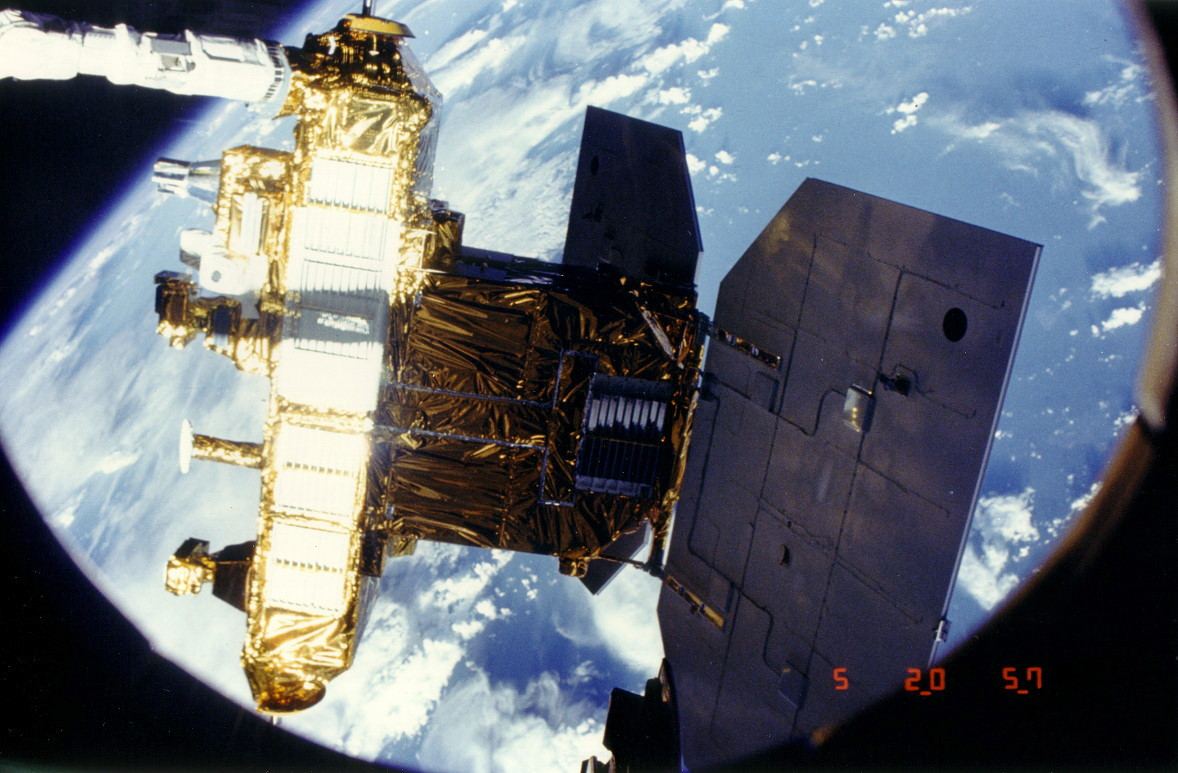
    A satellite with solar panels orbits above Earth against the blackness of space.

    Google’s Project Suncatcher prototype satellite answered its first prompt in orbit on 30 October 2026, producing a haiku written by the onboard Gemma 4 open model. Google called it the first AI response from a data-centre-class TPU in orbit. The Planet-built satellite launched on 1 October 2026 aboard a SpaceX Falcon 9 from Vandenberg Space Force Base, as one of 130 payloads on the Transporter-18 rideshare, and Google confirmed contact the same day. The prompt was uplinked during a ground-station pass and the poem was downlinked as the satellite passed Svalbard, Norway. The design paper was published in the journal Joule on 1 October 2026, sketching a cluster of 81 satellites within one kilometre.

    What the Evidence Shows

    The fridge-sized spacecraft carries four Trillium TPUs, but only one runs at a time, for about 20 minutes, on about one kilowatt of solar power. That leaves its effective average compute at roughly 14 to 19 percent of a single NVIDIA H100, according to independent analysis of Google’s figures. In proton-beam tests, the TPUs survived a radiation dose equivalent to a five-year mission without permanent failures. Google plans to fly two satellites in 2027 to test laser links between them, as part of a long-term research moonshot into orbital data centres. Google calls Suncatcher a long-term research moonshot and one of several proposals for orbital data centres, exploring whether continuous solar power in space can bypass the energy constraints that limit data centres on Earth. Reporting and analysis from sources such as IEEE Spectrum track the same developments, and specialists following the Google Project Suncatcher orbital TPU say the direction is now consistent across independent lines of evidence.

    The Wider Context

    Adoption of the Google Project Suncatcher orbital TPU follows a familiar pattern with an unfamiliar speed. Early users tolerate rough edges in exchange for advantage, mainstream users arrive when the tool disappears into existing workflows, and the market consolidates around whoever made that transition feel effortless. Vendors are racing less on raw performance now than on integration, support and trust.

    What Happens Next

    The realistic forecast for the Google Project Suncatcher orbital TPU is steady integration rather than sudden replacement: embedded in products people already use, improving in increments, and regulated in proportion to its reach. The companies and institutions that plan on that basis, training staff and redesigning processes instead of chasing launches, are the ones the adoption data tends to vindicate. You can follow related developments in our coverage of technology.

    It is also worth remembering how quickly the picture in this area has changed before. Positions that looked settled a few years ago have been revised as new data arrived, and the same humility is appropriate now. The strongest coverage of this subject, and the most useful advice, tends to come from sources that update their views openly when the facts move, rather than defending an earlier position long after it has stopped fitting the evidence available.

    Google space computing TPU
    Previous ArticleGoogle Launches Weather Lab With an AI Cyclone Model That Looks 15 Days Ahead
    Next Article Moody’s Lifts India Growth Forecast to 7 Percent for 2026-27
    Ines Costa

    Related Posts

    Tech

    Google Launches Weather Lab With an AI Cyclone Model That Looks 15 Days Ahead

    November 24, 2026
    Tech

    Google DeepMind Releases Genie 4, a World Model You Can Walk Inside

    November 23, 2026
    Tech

    Australia to Create an AI Regulator After an Agent Breached a Medicare Portal

    November 22, 2026
    Add A Comment
    Leave A Reply Cancel Reply

    Search
    Recent Posts

    Gen Z’s Vintage Craze: Nostalgia Driving a Cultural Revival

    June 24, 2025104 Views

    Heritage Cuisine as a Pillar of Cultural Identity

    June 24, 202593 Views

    CES 2025: Everyday Life Transformed by AI Gadgets

    June 30, 202578 Views

    Best 12 Wellbeing & Mental Health Apps of 2025

    June 29, 202577 Views

    Emerging Innovations Shaping Telehealth in 2025

    June 29, 202576 Views

    Quantum Leaps 2025: Vision to Innovation

    June 30, 202575 Views
    About Us

    Journal Noted offers expert insights on technology health business finance study travel reviews. A trusted platform inspiring curious minds with clear valuable content.

    Discover trends tips guides and honest evaluations designed to inform empower and engage readers seeking knowledge growth success across diverse fields and interests worldwide. #JournalNoted

    Facebook X (Twitter) Instagram LinkedIn
    Popular Posts

    Gen Z’s Vintage Craze: Nostalgia Driving a Cultural Revival

    June 24, 2025104 Views

    Heritage Cuisine as a Pillar of Cultural Identity

    June 24, 202593 Views

    CES 2025: Everyday Life Transformed by AI Gadgets

    June 30, 202578 Views
    Contact Us

    Have any questions or need support? Don’t hesitate to get in touch—we’re here to assist you!

    • Email: [email protected]
    • Whatsapp: +92 3055631208
    • Facebook: Outreachmedia

    Address: 940 S Westwood Blvd, Poplar Bluff, Missouri, United States

    • About Us
    • Contact Us
    • Disclaimer
    • Privacy Policy
    • Terms and Conditions
    • Write For Us
    • Sitemap
    Copyright © 2026 | All Rights Reserved | Journal Noted

    Type above and press Enter to search. Press Esc to cancel.

    WhatsApp us