

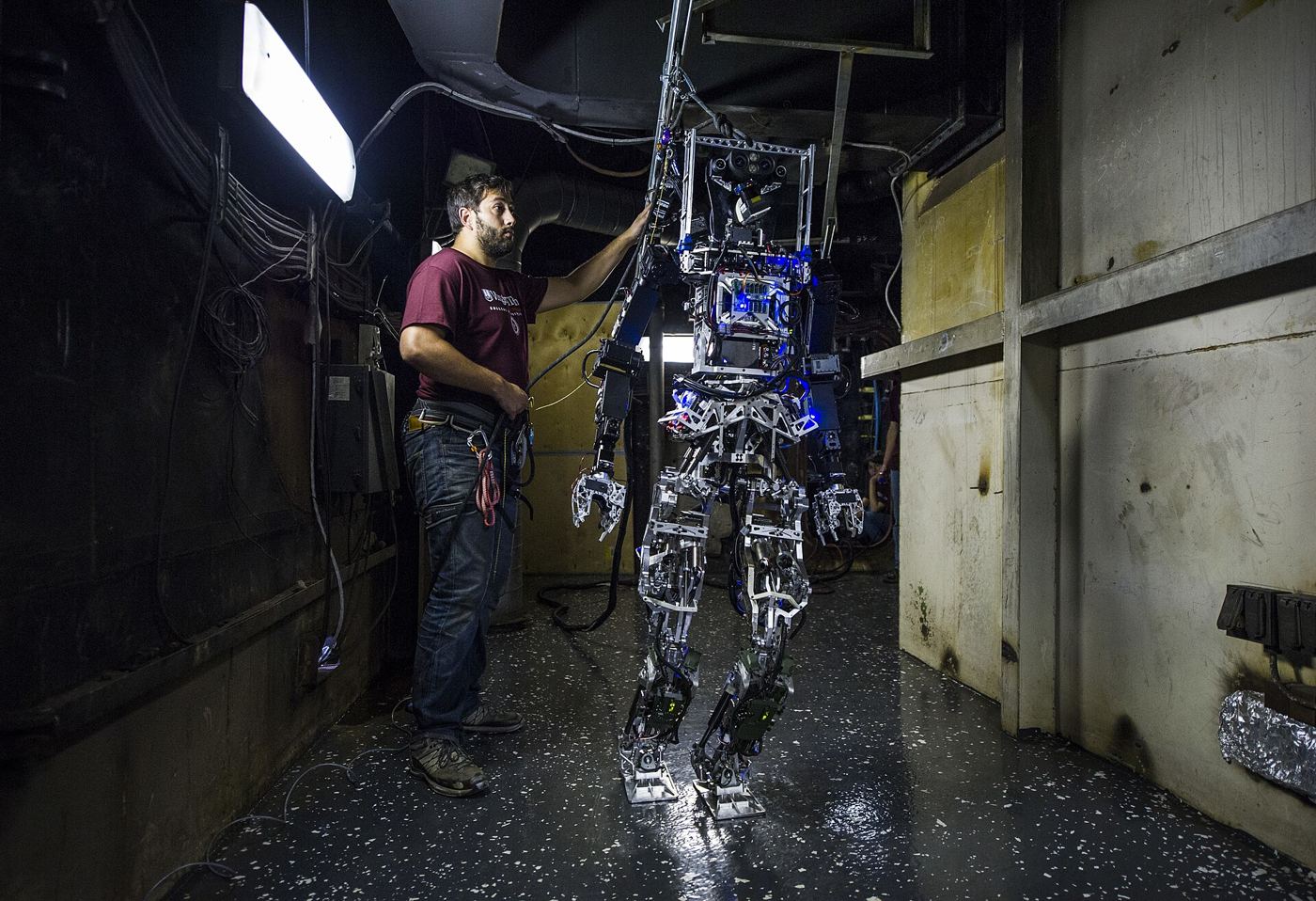
Humanoid robots in laboratories can walk, wave and increasingly manipulate objects on camera, yet their sense of touch has lagged far behind their vision. New tactile skins aim to close that gap. Thin, flexible sensor arrays fitted over fingers and palms measure pressure at hundreds of points many times per second, telling the robot not only that contact has occurred but how force is distributed and whether an object is beginning to slip. That stream of information is what allows a human hand to hold an egg firmly without crushing it, adjusting grip unconsciously as weight shifts. Robots equipped with pressure-sensitive skins are learning the same trick through training, linking patterns of contact with successful and failed grasps until they can correct a hold mid-movement. Some designs use cameras inside soft fingertips to watch a gel surface deform, producing rich images of texture and edges; others rely on electrical or magnetic sensors that are thinner and easier to manufacture at scale. Durability remains the hard problem, because skin that works in a demonstration must survive thousands of impacts, scrapes and cleaning cycles in a real workplace. Researchers are testing replaceable fingertip covers and self-reporting materials that flag their own wear before accuracy drifts.
What the Evidence Shows
The reason touch matters is that the tasks robots still fail at are overwhelmingly contact tasks: inserting connectors, handling soft produce, folding fabric, assisting a person to stand. Vision alone cannot judge friction, compliance or the moment a screw begins to thread. With reliable tactile feedback, robots can work at human pace in spaces designed for people rather than demanding the controlled fixtures of a traditional factory line. Laboratory trials show manipulation policies trained with touch data transferring better to new objects than vision-only systems, because contact physics varies less than appearance. Hospitals and warehouses watching these trials have a practical interest: a robot that can feel a package deforming or a tray tipping is safer around staff and less likely to damage goods. Standards and shared test objects are emerging so that claims about dexterity can be compared between laboratories rather than resting on edited videos. Progress will still be incremental, and hands remain among the most expensive parts of any humanoid design. But the direction is clear. The next leap in useful robots is less likely to come from a better camera than from skin that reports the physical world honestly, moment by moment. Reporting and analysis from sources such as IEEE Spectrum track the same developments, and specialists following tactile skin for laboratory robots say the direction is now consistent across independent lines of evidence.
The Wider Context
Adoption of tactile skin for laboratory robots follows a familiar pattern with an unfamiliar speed. Early users tolerate rough edges in exchange for advantage, mainstream users arrive when the tool disappears into existing workflows, and the market consolidates around whoever made that transition feel effortless. Vendors are racing less on raw performance now than on integration, support and trust.
What Happens Next
The realistic forecast for tactile skin for laboratory robots is steady integration rather than sudden replacement: embedded in products people already use, improving in increments, and regulated in proportion to its reach. The companies and institutions that plan on that basis, training staff and redesigning processes instead of chasing launches, are the ones the adoption data tends to vindicate. You can follow related developments in our coverage of technology.
It is also worth remembering how quickly the picture in this area has changed before. Positions that looked settled a few years ago have been revised as new data arrived, and the same humility is appropriate now. The strongest coverage of this subject, and the most useful advice, tends to come from sources that update their views openly when the facts move, rather than defending an earlier position long after it has stopped fitting the evidence available.
